
Best Crypto Options Trading Platforms in 2026


As the digital asset market has matured, crypto options trading platforms have become a practical way to lock in a price, hedge a portfolio, or trade volatility without buying the underlying coin outright. If you want to trade options on crypto, the short answer is yes - both CEX and DEX venues now support it, though the experience, fee structure, and risk profile differ quite a bit.
Interest in derivatives keeps rising. Binance, for example, reached $2.55 trillion in futures contract volume in July 2025, which gives a good sense of how active this side of finance has become as Bitcoin swings widen. From what I’ve seen, once BTC starts moving hard, traders quickly start comparing option chains, market liquidity, and how fast an electronic trading platform handles execution.
This article looks at centralized and decentralized venues, explains where each type fits, and outlines a simple path to start trading with more confidence. It also answers a few common questions up front, including what the best platform may be for different users, where you can trade crypto options, and whether Coinbase has this feature yet.
Centralized vs Decentralized Options Trading
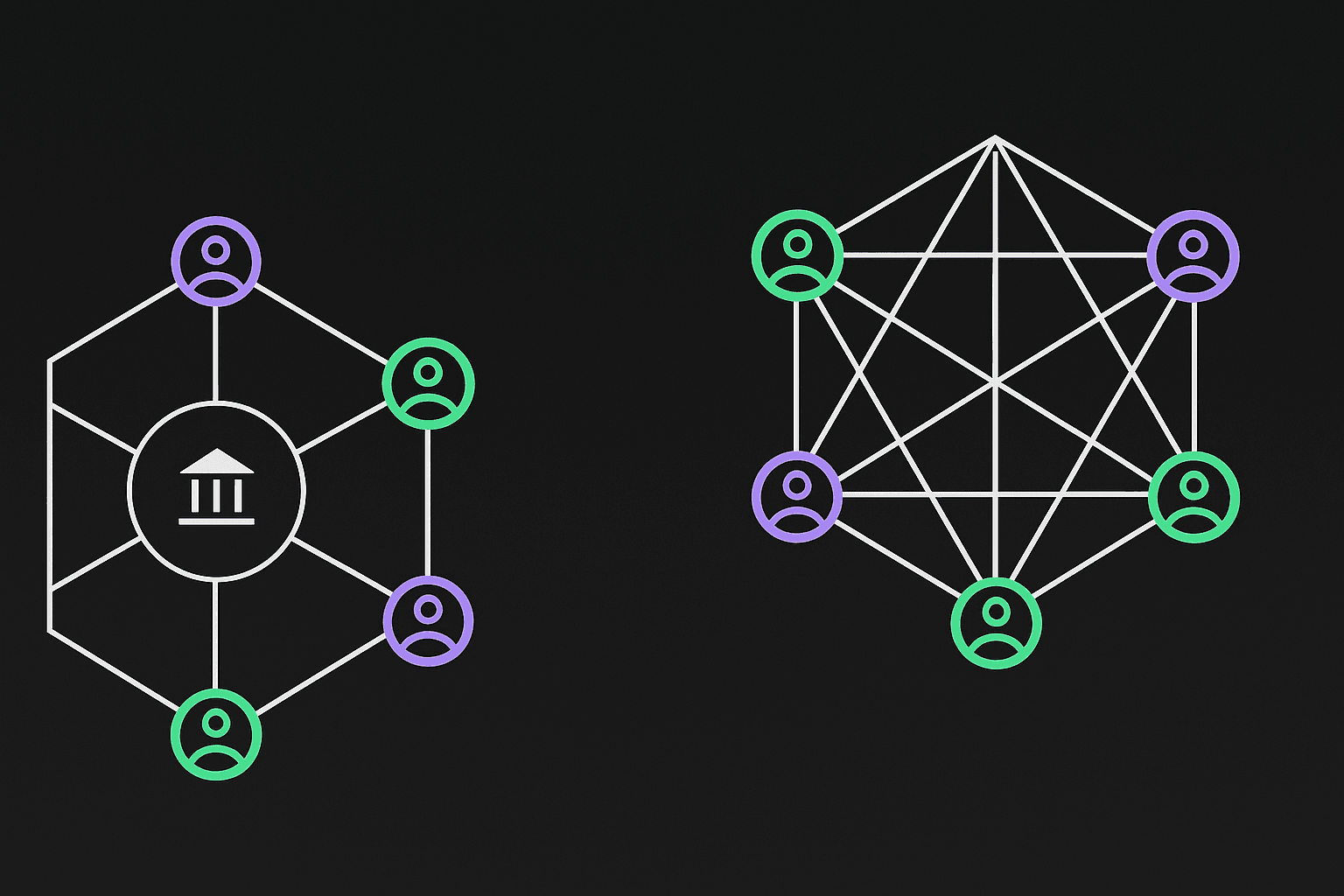
CEX and DEX platforms both let you trade an option contract on a cryptocurrency such as Bitcoin or Ethereum, yet the underlying architecture is very different. That difference shapes custody, speed, and how much responsibility sits with the trader.
A CEX works as an intermediary. The exchange holds user assets in a custodial system, supplies market maker support, and processes settlement on the back end. In return, traders usually get smoother order flow, tighter spreads, and built-in tools such as API access or margin controls. On the larger derivatives venues, this setup feels a bit like a well-maintained route map where each path is clearly marked and the data arrives in the expected place.
A DEX uses blockchain-based smart contracts for most of the process. Pricing may come from an AMM instead of a central order book, and users keep control of funds through their own cryptocurrency wallet. That adds transparency and reduces counterparty exposure, though it also tends to mean lower liquidity and a steeper learning curve. In my own checks, wallet-based workflows usually take an extra minute or two to confirm if network conditions are busy.
Below is a simplified comparison of the two models.
| Aspect | CEX | DEX |
|---|---|---|
| Liquidity | Usually deeper market liquidity | Depends on the local pool design |
| User Experience | Usually faster to read | More technical and wallet-centric |
| Custody | The platform controls the funds | The user keeps control until contract logic takes over |
| Security | Relies on the exchange system | Depends heavily on smart-contract code |
| Access | Usually requires KYC | Generally open to compatible wallets |
| Fees | May suit active volume | Can include gas costs on Ethereum or a Layer 2 network |
Best CEX Platforms for Crypto Options
If the main question is what is the best platform to trade crypto options, the answer usually starts with liquidity and execution quality. For most traders, Deribit, Binance, OKX, and Bybit are the names that come up first because they each run a large derivatives ecosystem and support serious options trading.
Deribit
Deribit remains one of the biggest names in crypto options, especially for BTC and ETH contracts. It handles a large share of global open interest, and that matters because deeper books usually mean cleaner fills and better price discovery for a derivative.
Its scale is hard to ignore. In May 2025, Deribit posted a record $42.5 billion in BTC options open interest. It also processed $743 billion in options volume during 2024. The platform is especially strong for institutional workflows, with portfolio margining and block trade support that many advanced traders expect from a mature futures exchange.
- Pros - Deep liquidity
- Pros - Strong infrastructure and advanced trading tools
- Cons - Unavailable in the United States
- Cons - The interface takes time to learn
Binance
Binance has enormous derivatives activity overall and is still one of the most visible places where traders can access crypto options. It entered this segment in 2020 with Bitcoin contracts on its mobile app, then widened access to ETH and BNB while adding a more advanced interface beside its easier mode.
That split design helps newer users get started without dropping them into a highly dense screen on day one. When I checked the product flow, the handoff between simpler and more advanced views felt fairly direct, which matters if a trader plans to move from basic contracts into more active strategies involving leverage or hedging.
- Pros - Broad global reach
- Pros - Strong liquidity and accessible modes
- Cons - Less specialized than dedicated derivatives venues
- Cons - Availability changes by region
OKX
OKX offers a broad derivatives environment that includes options, futures contract markets, and swap products. It ranked near the top of global derivatives volume in early 2025, holding roughly 21% market share. That scale gives active traders a good base for execution and portfolio management.
Its unified account structure and portfolio margin system make it easier to manage several positions in one place. For a trader who wants more data and tighter risk management, OKX also provides historical market information and stronger control settings than many retail-focused exchanges.
- Pros - Wide derivatives coverage
- Pros - Strong margin and risk tools
- Cons - Complex for beginners
- Cons - Access depends on local regulation
Bybit
Bybit built its reputation by balancing usability with enough depth for experienced users. Its USDC-settled European-style options are relatively easy to understand, yet the platform still supports more advanced order handling and flexible expiries.
Monthly BTC options volume has averaged around $11.3 billion, which points to steady retail interest. If a trader wants a clean interface without losing core functionality, Bybit is often one of the easier places to begin comparing contracts and strike price ranges.
- Pros - Clean interface
- Pros - Flexible expiries and a readable margin system
- Cons - Limited U.S. access
- Cons - Lighter institutional tooling than some rivals
Best DEX Venues for Crypto Options
Where can I trade options on crypto if I want to avoid a custodial cryptocurrency exchange? The usual answer is a DeFi protocol on Ethereum or a Layer 2 network. These platforms let users keep control of their wallet, though they also demand more attention to gas fees, contract design, and smart-contract risk.
Lyra Finance
Lyra Finance runs on Optimism and began with an AMM-based model for options. Instead of directly pairing every buyer with a seller, the protocol uses liquidity pools for pricing and settlement, which improves on-chain efficiency. It supports markets such as BTC and ETH and focuses on European-style contracts.
Lyra also uses an off-chain matching system called Lyra Matcher to speed up execution and reduce cost. I tend to read setups like this a bit like map layers - the chain handles the settlement record, while the matching layer improves the route between intent and execution.
- Pros - Efficient AMM structure
- Pros - Transparent on-chain activity with Layer 2 support
- Cons - Narrower asset coverage
- Cons - Lower liquidity than major CEX venues
Kyan
Kyan, previously known as Premia, is a decentralized options marketplace deployed on Arbitrum and Ethereum. It is known for a flexible architecture and community-supplied liquidity. Users can create eligible pools and trade options directly through smart contracts.
The V3 version improved capital efficiency and added stronger risk controls. A future V4 release is expected to push the platform further toward portfolio-based tools and additional trading services around the core options product.
- Pros - Broad token support
- Pros - Flexible contract design with community liquidity
- Cons - Product scope is still concentrated around derivatives
- Cons - Ethereum mainnet fees can run high
Dopex
Dopex is a DeFi protocol focused on structured products on Arbitrum. Its design aims to simplify option-based yield strategies for liquidity providers while giving buyers access to packaged contract exposure.
The project is best known for SSOV vaults, which let users sell covered options for yield. That can be attractive for investors who already understand how hedging and contract expiration work, though the learning curve is real and the platform is tied closely to activity on Arbitrum.
- Pros - Interesting yield structure
- Pros - Supports passive options strategies
- Cons - Dependent on Arbitrum activity
- Cons - Requires a solid background in DeFi mechanics
Opyn
Opyn launched in 2019 and was one of the first Ethereum options platforms. Its core idea was the oToken, an ERC-20 token that represents an options position and can be held or traded. That tokenized model helped shape how many later DeFi protocols approached non-custodial derivatives.
Even now, Opyn stands out as an early example of transparent smart-contract design. It no longer dominates volume, but it still matters historically and conceptually for anyone studying how decentralized finance turned options into transferable blockchain assets.
- Pros - Straightforward interface
- Pros - Transparent contracts and an early tokenized model
- Cons - Limited volume
- Cons - Fewer listed assets than newer protocols
How to Start Trading Crypto Options
Can I do option trading in crypto? Yes, as long as the platform supports derivatives in your region and you understand the contract terms. The workflow is close to spot trading at a high level, but the added layers of expiration, strike price, and volatility mean the learning curve is steeper.
Open an Account or Connect a Wallet
- Create an account on a CEX and complete KYC.
- Connect a self-custodial wallet to a DEX, then confirm the right network and keep wallet access secure.
On a CEX such as Binance, OKX, or Bybit, you create an account and complete identity checks. Most centralized venues require KYC before enabling derivatives, so expect to upload a government ID and, in some cases, a live face check. In many real cases, account setup takes only a few minutes, while verification may take several hours.
On a DEX such as Lyra or Dopex, you connect a self-custodial cryptocurrency wallet like MetaMask or Rabby. That process is faster, though it places more responsibility on the user to protect wallet keys and confirm the right network.
Add Collateral
- Fund the account or wallet with a supported asset.
- Use that collateral to open the position, with bank funding available on some CEX platforms.
You then fund the account or wallet with a supported asset such as BTC, ETH, USDT, or USDC. That collateral is used to buy an option or secure a position. Some CEX platforms allow transfers from a bank using fiat money, while others expect you to bring crypto in first.
Pick the Contract Terms
- Choose whether the position is a call or a put.
- Select the expiration date and strike price.
Every options trade starts with a direction. A call option is typically used when a trader expects the price to rise, while a put option is used when the view is bearish or when an investor wants insurance against downside movement.
After that, choose the expiration date and strike price. Those two settings do most of the heavy lifting in the contract. If you have ever worked with GPS data, the comparison is fairly clean - a wrong coordinate can throw off the whole route, and a poorly chosen strike can do the same to an otherwise sensible trading strategy.
Execute and Monitor the Position
- Place the trade through the platform interface.
- Track price action, implied volatility, and time decay as the position develops.
Place the trade through the platform interface and keep an eye on market movement, implied volatility, and time decay. Some traders rely on automated tools or API-based systems to watch data more closely, though manual review still matters. I usually find that a fast interface reveals itself within the first few clicks, especially when switching between order entry and portfolio screens.
Control Risk
- Use only risk capital and know how the contract can expire.
- Use stop orders or spread structures when the platform supports them.
Use only capital you can afford to put at risk, and understand how the contract can expire. Some platforms support stop orders or spread structures that help hedge exposure. That does not remove risk, but it can make position management more deliberate.
Common Questions About Platforms and Access
Does Coinbase Have Crypto Options Trading
Always check platform availability and derivatives features in your region before trading crypto options.
Always check platform availability and derivatives features in your region before trading crypto options.
As of 2026, Coinbase does not offer standard retail crypto options trading on its main exchange in the way Deribit, Binance, OKX, or Bybit do. Retail users looking for listed crypto options will usually need a specialist derivatives venue or a DeFi protocol instead.
Coinbase has had derivatives exposure through regulated subsidiaries and institutional-facing products, but that is different from broad retail access to a live crypto options chain on the main Coinbase platform. In practice, the exact product set depends on entity and jurisdiction, so users in the United States should confirm which Coinbase branch is serving them before assuming options are available.
What Are Crypto Options
A crypto option is a financial contract that gives the holder the right, though not the obligation, to buy or sell a cryptocurrency at a set price before expiry. The underlying asset is usually Bitcoin or Ethereum, and the contract can be used for speculation, hedging, or portfolio positioning around volatility.
Is Trading Crypto Options Safe
The mechanics can be as secure as the platform behind them, yet the structure introduces extra layers of risk compared with spot markets. On a CEX, users face custodial and counterparty exposure. On a DEX, smart-contract bugs and wallet handling become more important. Safety depends heavily on platform quality, user discipline, and how well the trader understands the contract.
Where Are the Strongest Places to Trade
For deep liquidity and a mature electronic trading platform, Deribit and Binance are among the strongest choices. For users who want decentralized finance infrastructure and wallet control, Lyra and Dopex are well-known alternatives.
Can Options Trading Be Profitable
It can be, though profit is never guaranteed and the contract can lose value quickly if the market moves the wrong way or time runs out. Skilled traders sometimes use options to hedge a stock-like directional view on a coin, or to trade volatility itself. The key is understanding the derivative, the fee model, and the risk management tools before putting on the trade.
Across the current field of crypto options trading platforms, the best fit usually depends on what matters more to you - maximum liquidity on a CEX, or direct wallet control on a DEX. Deribit, Binance, OKX, and Bybit lead the centralized side, while Lyra, Kyan, Dopex, and Opyn represent the more decentralized end of the market. Either way, the platform should make contract data, portfolio information, and execution quality easy to read before you commit to any investment.


