
Solana Trading Signals Platforms Worth Watching in 2026


On Solana, a coin can move before most traders have even refreshed the page. That is why solana trading signals matter. They turn raw blockchain data into usable information about price movement, wallet behavior, and liquidity so a trade can be timed with more confidence. Solana’s network helps this process because fees stay tiny and throughput stays high, which keeps memecoin activity fast and crowded.
At a practical level, Solana trading signals are usually generated by automated algorithms or bots that scan market data and on-chain statistics. A platform may track volume and unusual buys, then turn that data into a buy or sell cue, a trend alert, or a warning about suspicious activity. Those signals can appear on a dashboard or arrive through a mobile alert or Telegram message. Think of it like reading a GPS trace instead of one map point. One isolated transaction says little. A pattern across wallets and DEX activity says much more.
The tools below focus on that exact job. Birdeye, , Nansen, DexScreener, and Photon SOL each approach the financial market from a different angle, with different methodology and speed. I looked at them the way I would compare map layers in GIS, checking how quickly the data appears and how easy it is to verify before acting on it.
| Platform | Key Features | Pros | Cons | Pricing |
|---|---|---|---|---|
| Birdeye | Real-time token data and wallet monitoring | Fast updates and broad market coverage | Can feel crowded for new users | Free basic tier, Pro from 45 USD per month |
| AI-assisted alerts and wallet flow tracking | Quick Telegram delivery and strong execution tools | Heavily centered on Solana | Free basic tier plus transaction-based fees | |
| Nansen | Wallet labeling and deeper flow analysis | Strong research context | Premium pricing and steeper learning curve | Subscription model |
| DexScreener | Live DEX charts and token discovery | Easy to use and free at the core level | Limited automation | Free core access, API costs separate |
| Photon SOL | Fast charting and quick order tools | Built for speed | Fees can weigh on smaller trades | 1% fee plus priority fees |
Birdeye
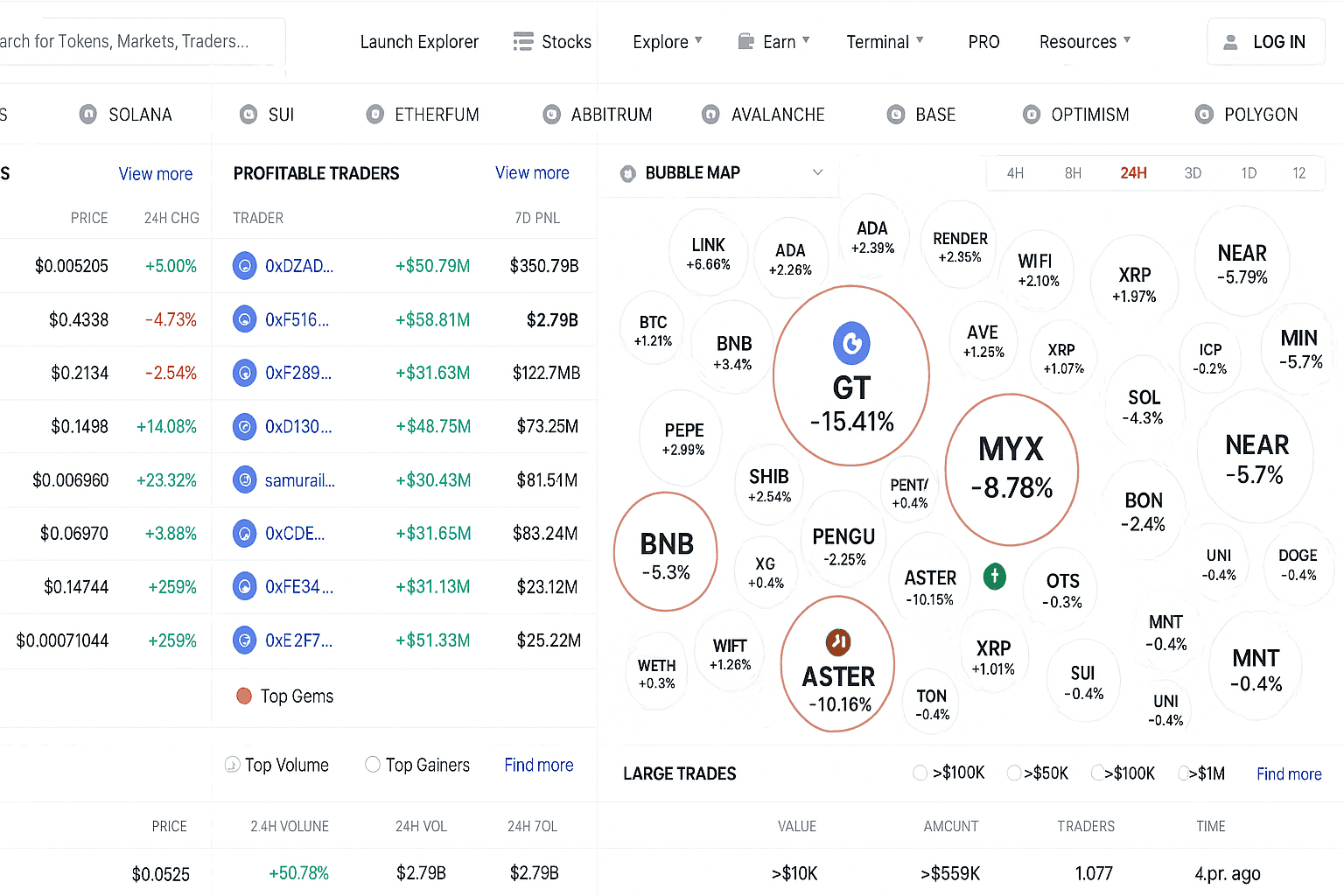
Birdeye remains one of the strongest real-time data terminals for Solana tokens. It gives traders a live view of price action, chart behavior, and wallet flows, which is exactly the kind of information memecoin traders need when conditions change in seconds.
Key Features
- Live price tracking with volume alerts for fast-moving coins.
- Wallet monitoring that helps surface profitable addresses.
- Broad exchange coverage that improves data depth.
- Signal prompts for sudden momentum shifts.
- Liquidity checks that help screen questionable tokens.
Its main strength is speed paired with visibility. Traders can watch token activity on Solana and catch signs of a pump or sharp unwind before the chart fully reflects it. Birdeye pulls together on-chain data, which makes whale moves easier to spot and makes liquidity changes easier to judge. In my own testing, the dashboard settled into a usable workflow after a few clicks, though the density can feel like raw GPS output before filtering. Wallet tracking is especially useful because it shows how higher-win-rate traders behave, and the risk checks help identify tokens with unlocked liquidity or contract issues. Birdeye also reaches beyond Solana, so it has value for broader crypto trading and cross-chain comparison against Ethereum or Binance-linked markets.
Pros
- Wide market coverage supports comparison beyond Solana.
- Fast updates help with timing in high volatility.
- API access is helpful for custom workflows.
Cons
- New users may find the interface crowded.
- Refresh speed can slip during heavy Solana congestion.
- AI-driven signal depth is limited beside specialist bots.
Pricing- Basic charts and alerts are free. The Pro plan starts at 45 USD per month and adds extras such as CSV export and premium integrations.
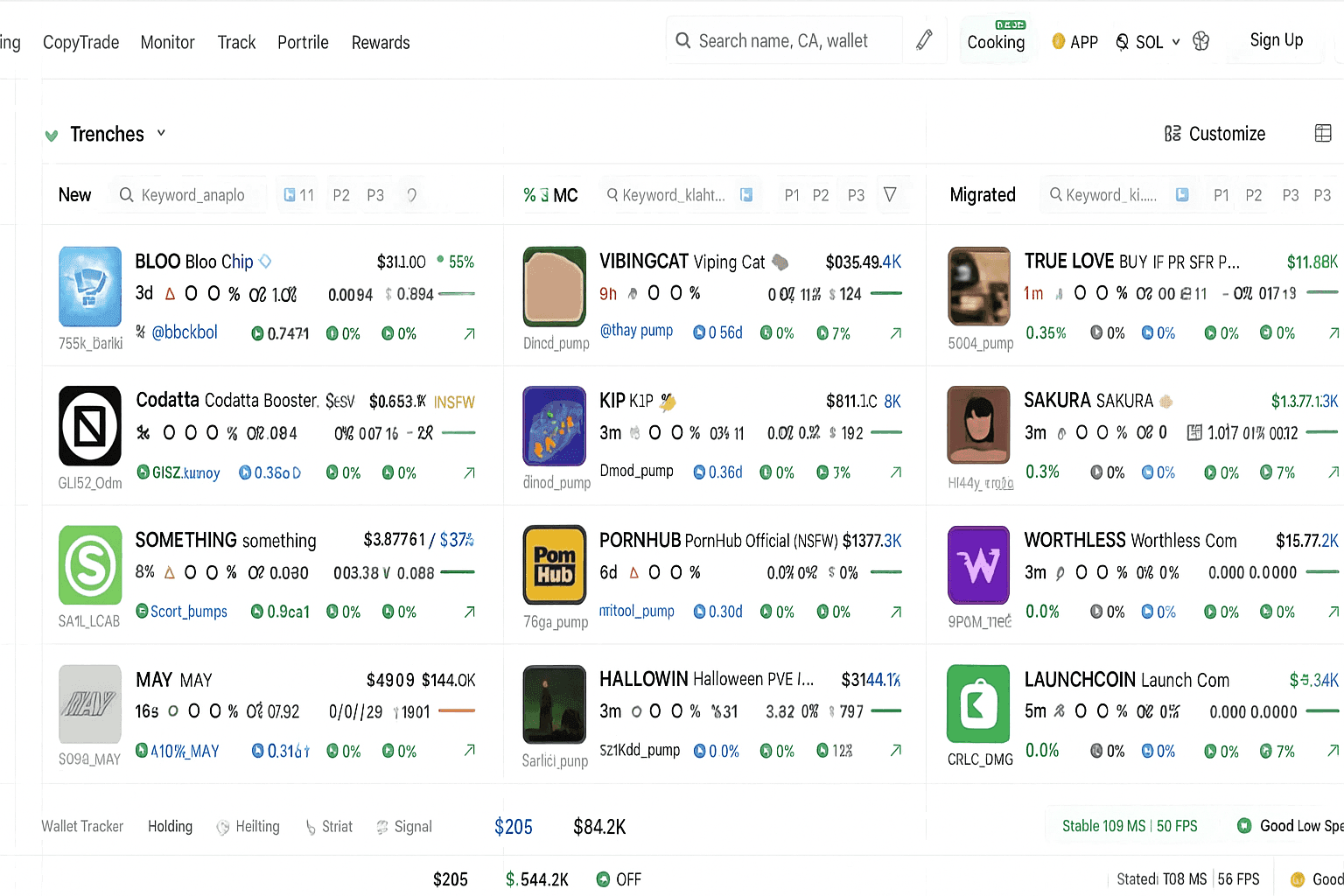
is built more tightly around Solana and leans hard into AI-assisted signal generation. Its goal is straightforward. Give retail users faster access to the same kind of wallet and flow analysis that larger desks use when they track a cryptocurrency launch or a sudden rotation.
Key Features
- Smart money tracking for whale wallets and insider-style flows.
- Telegram alerts through @GMGNAIBot for quick action.
- Contract screening that flags honeypot risk.
- Launch monitoring for newly listed tokens.
- Copy-trading support based on stronger wallets.
The appeal here is the blend of automation and speed. spots early accumulation, unusual flow, or fresh launches on venues such as Pump and pushes alerts through Telegram with very little friction. That cuts response time, especially on mobile. Its copy-trading tools reduce the amount of manual technical analysis a user needs to do, while contract checks help avoid obvious traps. Adjustable priority fees are also useful in fast periods because execution quality often matters more than a perfect entry price. From what I’ve seen, works well for both newer users and more active traders, though its center of gravity stays firmly on Solana.
Pros
- Signal analysis adapts well to shifting market conditions.
- Execution tools are reliable for quick entries.
- Telegram setup is simple and fast.
Cons
- The platform is heavily Solana-centric.
- Frequent trades can make priority fees add up.
- The free tier keeps advanced tools locked.
Pricing- A 1% handling fee applies per transaction, with adjustable priority fees and a free basic tier. Paid access unlocks stronger AI features.
Nansen
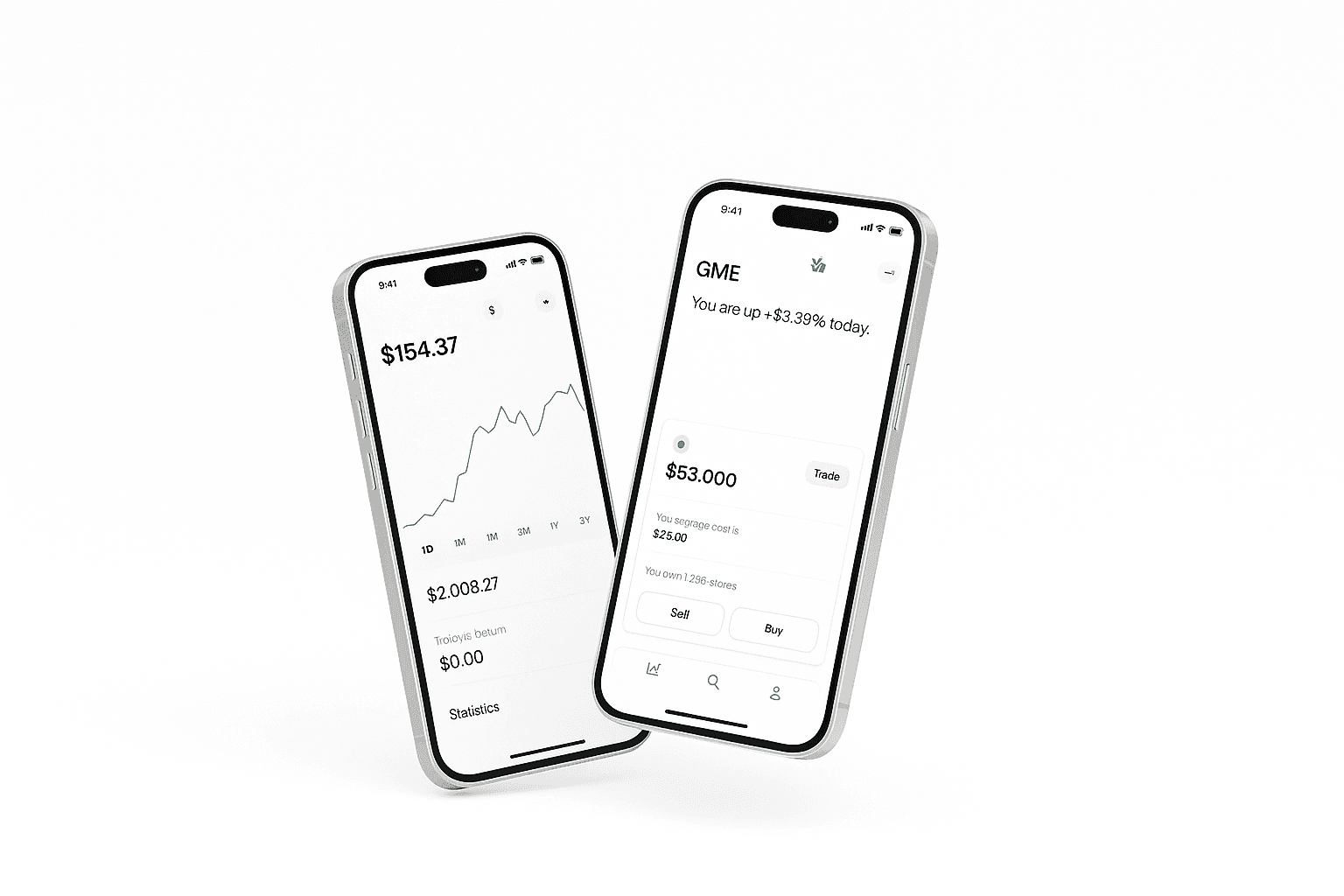
Nansen sits closer to institutional research than to a lightweight signal bot. For Solana memecoins, that means deeper wallet analysis, stronger labeling, and better context around where money is moving. If Birdeye is good at showing motion, Nansen is good at explaining who caused it.
Key Features
- Detailed wallet tracking for stronger traders.
- Custom dashboards for live market views.
- Flow analysis covering token movement and market cap shifts.
- Labeled wallets that improve copy-trading research.
- Alerts for large transfers or unusual buying.
Nansen’s value comes from context. Its alerts can flag abnormal transfers and buying patterns before a memecoin move becomes obvious on social feeds. Token-level views provide a tighter read on DEX activity, and wallet labels make it easier to separate credible participants from addresses tied to rug behavior. I tend to read blockchain explorers like overlapping map layers, and Nansen handles that style of analysis well because one wallet action is always framed by surrounding data. It is not built purely for Solana, but the cross-chain view is useful when flows spill between Solana and other cryptocurrency exchange ecosystems.
Pros
- Research depth helps expose early market structure.
- Smart alerts improve confidence in a signal.
- Wallet labels add useful transparency.
Cons
- The learning curve is steeper for casual users.
- Update speed favors depth over pure immediacy.
- Full access is costly beside free tools.
Pricing- Nansen uses a subscription model. Public pricing detail is limited, though the service is generally positioned at the premium end, with API access aimed at advanced users.
DexScreener
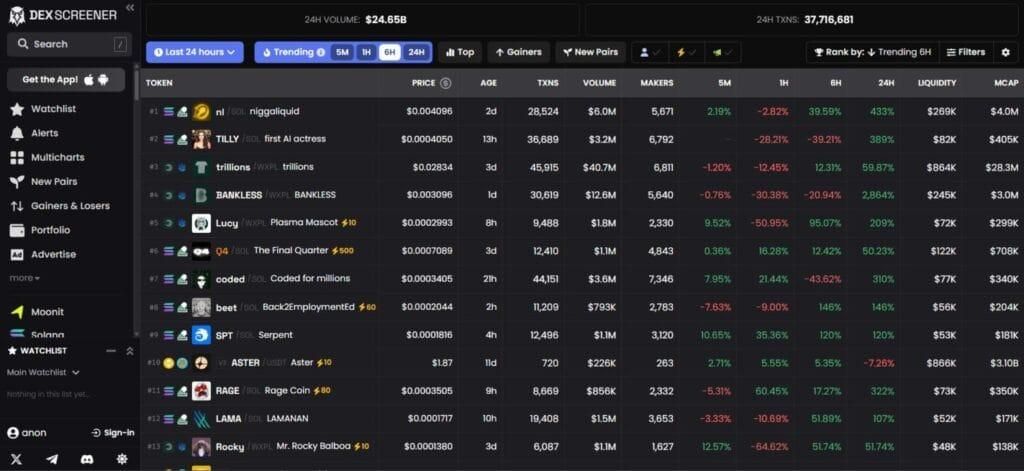
DexScreener is one of the easiest ways to monitor Solana DEX activity without creating much setup overhead. It aggregates price and trade data from decentralized venues into a single browser view, which makes it useful for spotting new pairs or sudden spikes.
Key Features
- Live charts and trade history from Solana DEX markets.
- Discovery tools for fresh token pairs.
- Liquidity and holder data for quick screening.
- Trending alerts tied to volume and price moves.
- Filters that help identify locked liquidity.
For many traders, DexScreener is the first pass. It is where you scan fast and decide what deserves more scrutiny. The platform highlights percentage changes, turnover, and trending names, which can reveal hot memecoins before they are widely discussed. It also helps with scam filtering because holder concentration and liquidity status are easy to inspect. During peak traffic, refresh timing can lag a little, and that matters on Solana, but the interface is still one of the quickest ways to map market movement. It is free at the core level, which makes it a useful starting point before bringing in technical indicators or deeper wallet statistics elsewhere.
Pros
- Core metrics are easy to read and compare.
- The free version covers most basic needs.
- Setup is minimal in any browser.
Cons
- Updates can slow during extreme volatility.
- Suspicious tokens still require outside verification.
- Automation features are limited.
Pricing- Core charts and alerts are free. Optional API access is available with separate costs for advanced use.
Photon SOL
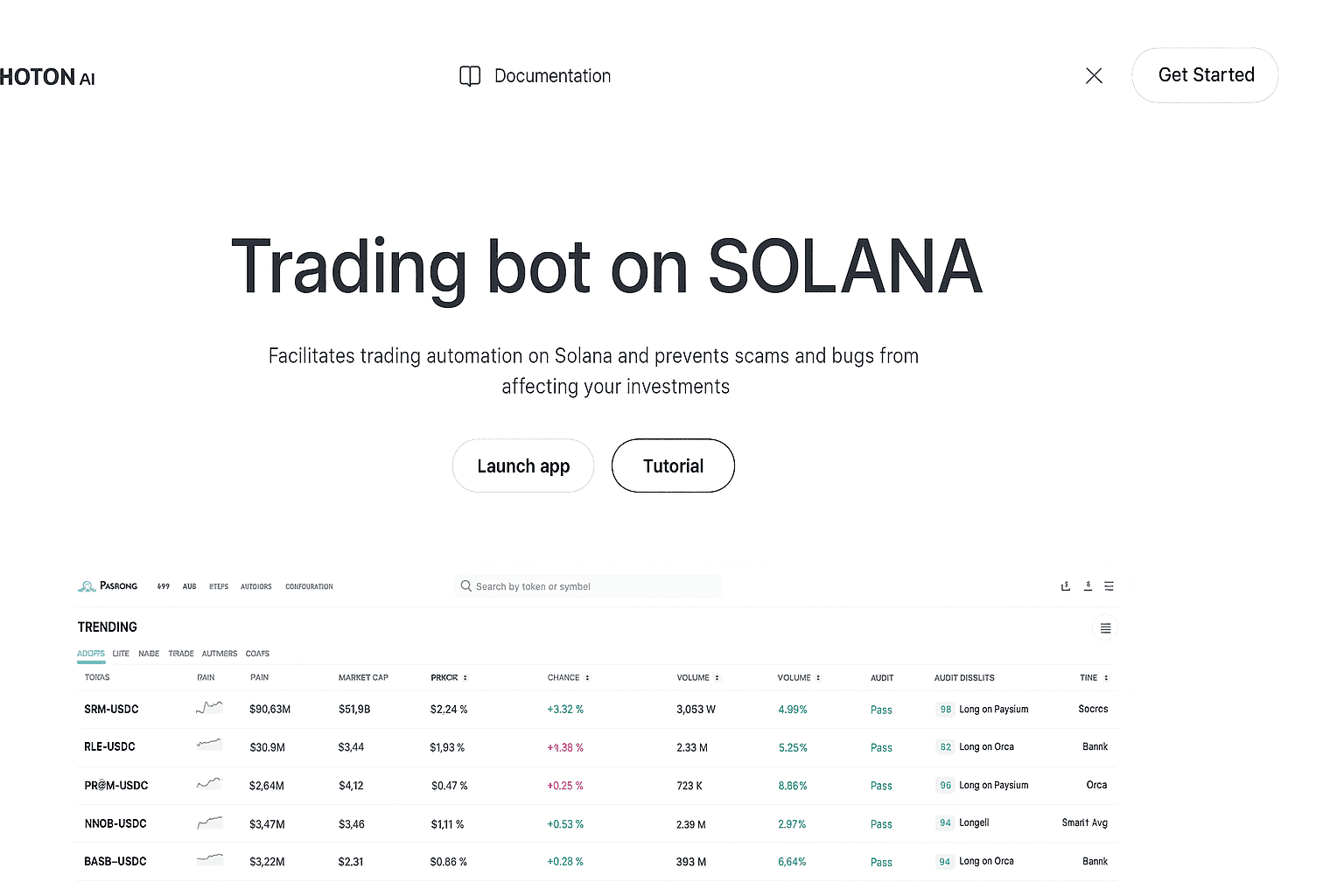
Photon SOL is aimed at speed first. It is built for traders who want to catch launches quickly and place orders with as little friction as possible. On Solana, that focus matters because the difference between an early entry and a late one can be a matter of seconds.
Key Features
- Candlestick updates that are faster than Birdeye.
- Quick order tools with MEV protection.
- Mobile support and an activity points system.
- Alerts for new pairs and fast-rising tokens.
- Filters that screen unverified or risky projects.
The platform is tuned for rapid execution. Faster chart updates help users catch launches ahead of slower dashboards, and the MEV protection is a meaningful safeguard against front-running. Mobile support also makes a difference. I checked several screens on a phone-sized layout, and the path from discovery to order entry was short enough to feel practical in live conditions. Photon SOL keeps the workflow lean, though smaller traders may feel the impact of its fee structure more than larger accounts do.
Pros
- Very fast updates support sniping workflows.
- One-click trading feels intuitive.
- MEV protection improves execution safety.
Cons
- Fees can weigh on small-size trading.
- Feature depth is narrower than analytics-heavy tools.
- Some users have raised security concerns.
Pricing- A 1% fee applies to buy and sell transactions, along with added priority fees such as 0.0005 SOL. Costs are visible, though frequent use can make them meaningful.
How These Platforms Work Together
Used well, these tools form a layered workflow. One platform surfaces a coin. Another checks wallet behavior. A faster terminal handles execution. That is how Solana trading signals usually work in practice. Most systems start by collecting blockchain and market data, then applying a statistical model or rule set to analyze it. After that, the platform generates an alert and sends it to the user through the interface or a linked app. Traders usually compare more than one signal source before acting, because a single alert can read like a messy GPS trace until a second data point confirms it.
Setup is fairly direct. Birdeye connects through its dashboard. depends on Telegram authorization. Nansen requires a standard account. DexScreener works from the browser and can be used with or without wallet linkage, while Photon SOL supports direct Phantom connection for quicker order flow. In testing, the basic setup on most of these tools took only a couple of minutes, aside from any account approval on premium services.
- Discovery on Birdeye or DexScreener
- Validation on or Nansen
A final step is execution through Photon SOL or a DEX aggregator such as Jupiter when price efficiency matters more than raw speed. This approach gives a trader a broader read on the financial market and reduces reliance on one signal provider.
- Check liquidity status and review contract safety
- Use stop levels, then keep memecoin exposure limited within a wider investment plan
Conclusion
Birdeye, , Nansen, DexScreener, and Photon SOL all solve a slightly different part of the same problem. Some are stronger at raw data, while others are better at execution or wallet intelligence. Put together, they give traders a more reliable way to read sol price action, follow smart money, and react to sudden shifts without relying on noise alone. That mix of technical analysis, live statistics, and practical verification is where better solana trading signals usually come from.Better Solana decisions usually come from lining up signals from more than one source, then acting only when the routes agree.
Better Solana decisions usually come from lining up signals from more than one source, then acting only when the routes agree.
Frequently Asked Questions
Which Platform Fits Beginners Best
DexScreener is the easiest starting point because it is free, browser-based, and simple to read. Birdeye also works well once a user is comfortable with denser data.
How Can Whale Activity Be Tracked on Solana
and Nansen are the strongest options here. pushes quick Telegram alerts, while Nansen offers deeper wallet analysis and stronger labeling for follow-up research.
Which Tool Is Fastest for New Solana Coin Launches
Photon SOL is built around speed. Its faster chart updates and MEV protection make it a strong choice for catching early token movement.
How Do Traders Reduce Rug-Pull Risk
Tools such as Birdeye, , and DexScreener help by showing liquidity status and contract warnings. A token that fails those checks should be treated with caution.
Are These Platforms Free to Use
Some are free at the entry level, especially Birdeye and DexScreener. Others rely on transaction fees or premium subscriptions, with Nansen sitting at the higher end and or Photon SOL charging around execution activity.


